Ingredients
Method
- Hydrate the flour. Combine the freshly milled flour, sourdough discard, and 260 g of the water until no dry flour remains. Cover and rest for 30 minutes.
- Activate the yeast. During the last 10 minutes of the flour rest, combine the remaining 50 g water, warmed to 105–110°F, with the active dry yeast and 25 g honey or brown sugar. Let stand for 5–10 minutes, until foamy.
- Knead. Add the yeast mixture and salt to the rested dough. Squeeze and fold until incorporated, then knead for about 8–10 minutes, or until firm, cohesive, and elastic. Whole-grain dough may retain a slightly textured surface. If it remains dry or cracks when worked, add water 5 g at a time. If using a mixer, follow its speed and dough-capacity guidance for stiff dough.
- Let rise. Cover and let rise for 60–90 minutes, or until noticeably puffy and expanded. It may take longer in a cool kitchen. Whole-grain dough may not fully double.
- Divide and shape. Divide into 8 equal pieces, approximately 122 g each. Roll into tight balls, cover, and rest for 10 minutes. Poke a hole through each center and gently stretch it to about 2 inches wide; the holes will shrink as the dough rests and bakes.
- Proof and preheat. Place on a parchment-lined baking sheet, cover, and rest for 20–30 minutes, until slightly puffy. Meanwhile, heat the oven to 425°F.
- Boil. Bring the 2,000 g water and 40 g honey or brown sugar to a gentle boil in a pot wide enough for the bagels. Boil in batches for 30 seconds per side. Keep the bagels in a single layer without crowding. Remove with a slotted spoon and drain briefly.
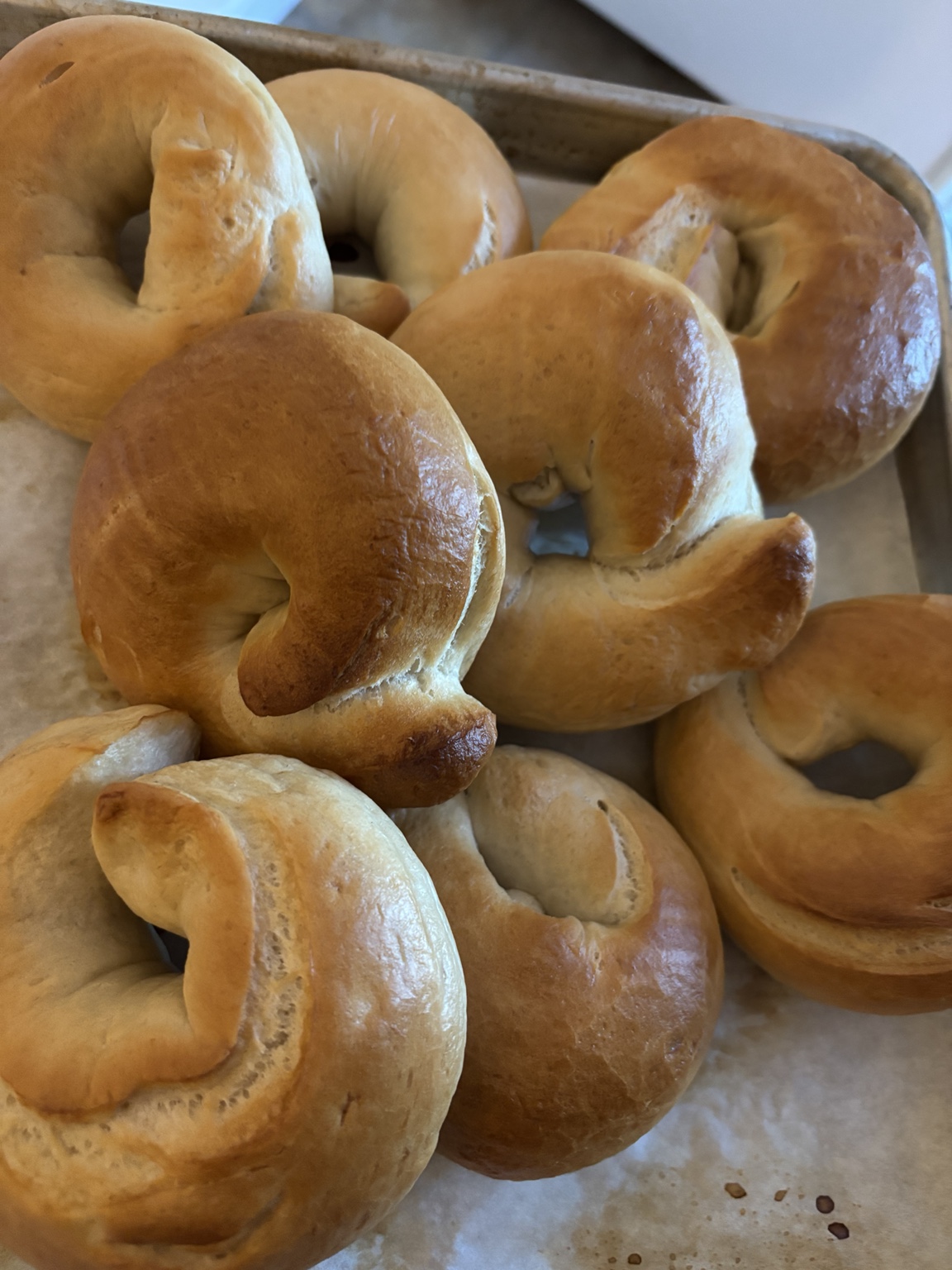
- Top and bake. Return to the lined baking sheet and add toppings while the surfaces are still damp. Bake for 22–27 minutes, until deeply golden and baked through.
- Cool. Transfer to a rack and cool for at least 30 minutes before slicing.
Notes
Flour: Avoid substituting soft wheat for the full amount. Use half fresh and half all-purpose for a different combination.
Discard: This recipe assumes 100% hydration discard. Either whole-wheat or white-flour discard can be used. To keep the bagels entirely whole grain, use whole-grain discard.
Water: Fresh-milled flour absorption varies. Start with the listed amount and adjust in small increments after the flour rest as needed.
Yeast: The active dry yeast supplies the rise; the discard does not need to be active.
Overnight option: After shaping, cover well and refrigerate promptly, skipping the room-temperature final proof. Check the bagels in the morning. If already slightly puffy, boil from cold. If still dense and unexpanded, let them finish proofing at room temperature before boiling. With 7 g yeast, this option depends on a properly cold refrigerator; the same-day method gives more predictable timing.
Storage: Keep completely cooled bagels airtight at room temperature for up to 2 days. For longer storage, slice and freeze. Toast from frozen.