Ingredients
Method
Make the dough
- Combine the flour and salt in a bowl or mound them on a clean counter. Make a well in the center and add the eggs.
- Beat the eggs with a fork, gradually incorporating the flour until a shaggy dough forms.
- Gather the dough with your hands. If it will not hold together when squeezed, add water 1 teaspoon at a time. Use only enough to bring it together.
- Knead for 8–10 minutes, until smooth and pliable. The dough should feel firm without being sticky. Dust lightly with flour if needed.
- Wrap or cover tightly and rest at room temperature for 30 minutes.
- Divide the dough into four pieces. Keep the unused portions covered while you work.
Roll and cut by hand
- Lightly flour your counter and rolling pin. Flatten one portion of dough and roll from the center outward, turning it regularly.
- Roll to approximately 1 mm thick, or thin enough to see the shadow of your hand through the sheet. If it springs back, cover and rest for another 10–15 minutes.
- Lightly flour both sides of the sheet and fold it loosely into thirds. Avoid pressing the layers together.
- Slice into strips with a sharp knife: approximately ¼ inch wide for fettuccine or wider for ribbon noodles.
- Unfold immediately, separate the noodles, and dust lightly with flour.
Or use a pasta roller & cutter
- Flatten one portion of dough and feed it through the widest roller setting.
- Fold the sheet into thirds and pass it through the widest setting again. Repeat 2–3 times until smooth.
- Reduce the roller opening one setting at a time, passing the sheet through each setting until approximately 1 mm thick. Follow your machine’s guidance and dust lightly with flour if the dough sticks.
- Cut long sheets into manageable lengths. If the surface is tacky, let it sit briefly until it feels lightly dry but still flexible.
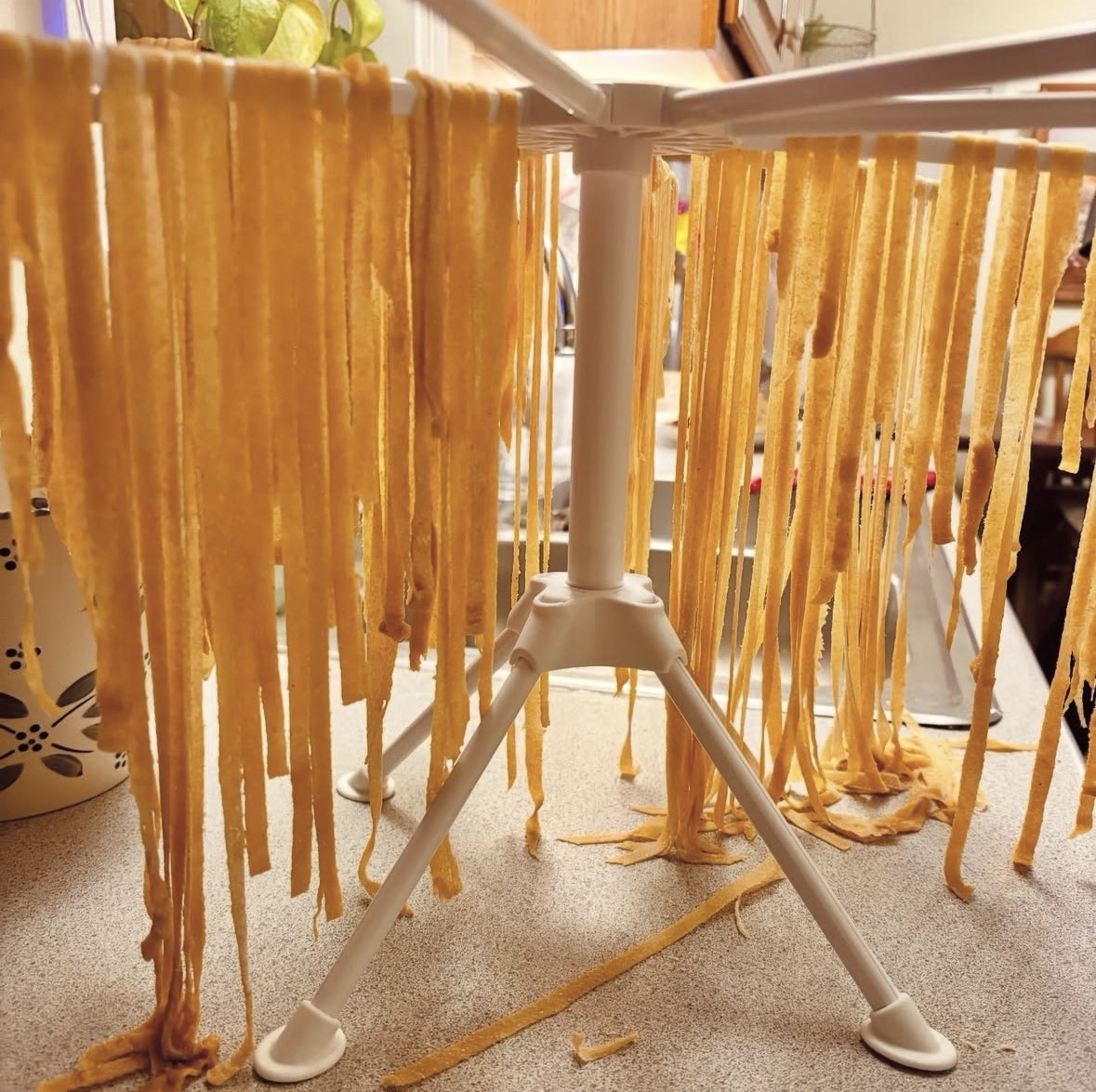
- Feed through the cutter attachment. Separate the noodles and lightly dust with flour. Arrange in loose nests on a floured tray or hang briefly on a pasta rack while finishing the batch.
Cook the pasta
- Bring a large pot of salted water to a boil.
- Add the noodles and stir gently to separate. Start checking at 2 minutes; thin noodles generally take 2–4 minutes, while thicker or whole wheat noodles may take 4–6 minutes.
- Taste for doneness, reserve a little pasta water, and drain. Toss with your favorite sauce.
Notes
- Fresh-milled flour: For a starting variation, substitute 240 g finely milled hard white wheat flour for the all-purpose flour. Whole wheat dough may need more water and may feel less smooth. Add water gradually, judging by texture.
- Half whole wheat option: Use 120 g all-purpose flour and 120 g finely milled whole wheat flour.
- Water: Egg size and flour absorption vary. You may not need any water, or you may need slightly more than the listed range.
- Resting: Keep the dough covered so the surface stays soft. Give it another short rest if it resists rolling.
- Make ahead: Refrigerate tightly wrapped, uncut dough for up to 2 days.
- Freezing: Freeze cut noodles in loose nests on a lined tray, then transfer to a freezer bag. Cook directly from frozen, allowing extra cooking time.