
There are desserts you throw together at the last minute, and then there is caramel cheesecake. This one needs time to chill, but most of that time is completely hands-off. Make it the day before, add the caramel and whipped cream before serving, and dessert is handled.
As an Amazon Associate I earn from qualifying purchases.
The filling is a simple baked vanilla cheesecake with a buttery graham cracker crust. The caramel goes on top, where you actually get it in every bite, and the whipped cream around the edge makes it look like you had more of a plan than you probably did.
What makes this caramel cheesecake work
Room-temperature cream cheese helps the filling mix smoothly without a lot of beating. A pan of hot water on the rack below the cheesecake adds moisture to the oven without putting the springform pan directly in water. Gentle cooling and an overnight chill help the texture finish setting.
A crack is still possible … and a layer of caramel is a very useful thing to have waiting.
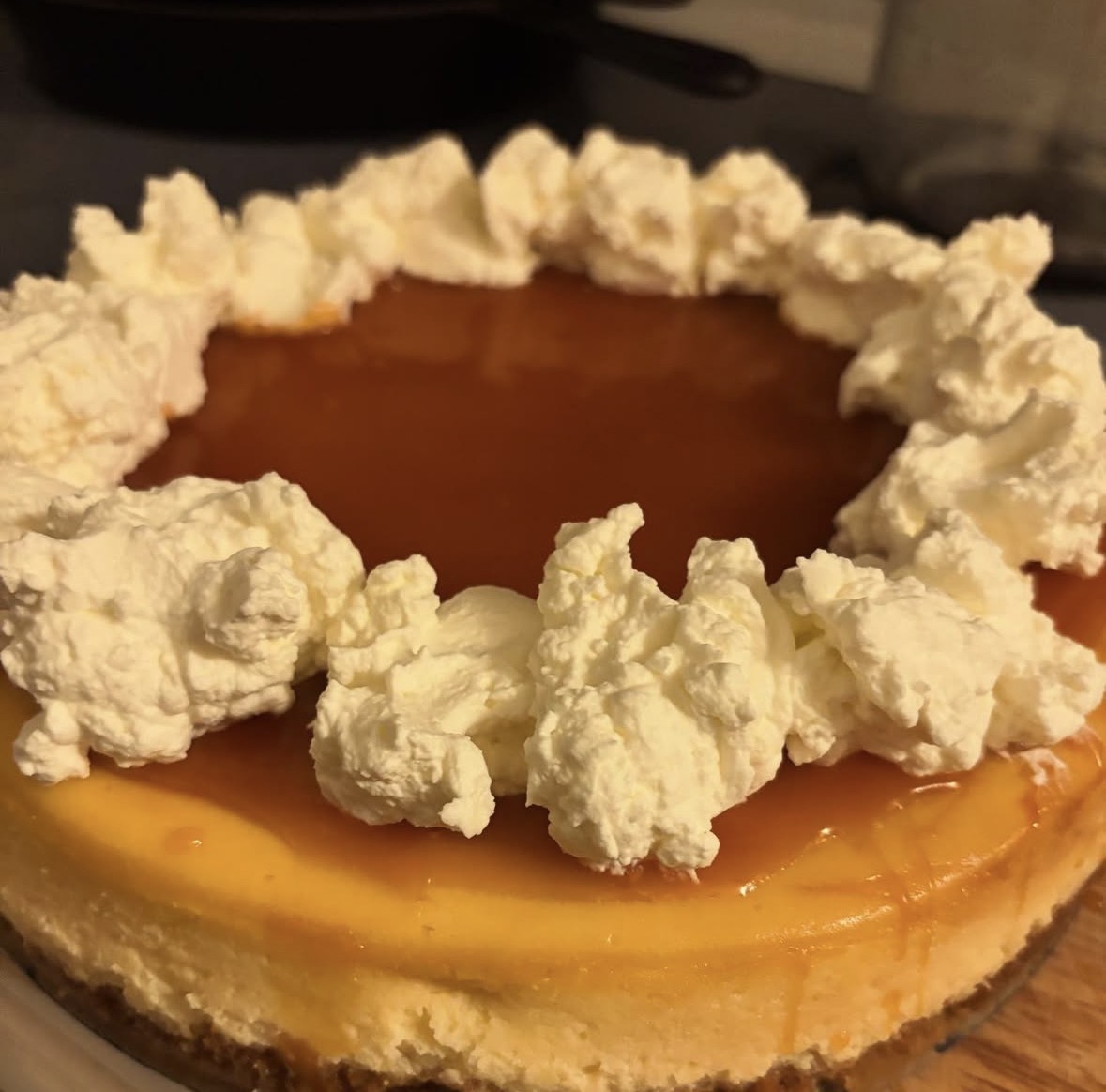
Caramel Cheesecake with Whipped Cream
Ingredients
Method
- Prepare the oven and pan. Heat the oven to 325°F. Place one rack in the middle and one below it. Grease a 9-inch springform pan and line the bottom with parchment. Place the springform pan on a rimmed baking sheet to catch any butter drips.
- Bake the crust. Stir the graham cracker crumbs, sugar, melted butter, and salt together until evenly moistened. Press firmly into the bottom of the pan and slightly up the sides. Bake for 10 minutes, then set aside while you mix the filling. Leave the oven on.
- Mix the filling. Beat the softened cream cheese and sugar on low to medium-low speed until smooth, scraping the bowl thoroughly. Mix in the sour cream and vanilla. Add the eggs one at a time on low speed, mixing just until each disappears. Avoid whipping air into the batter.
- Prepare the oven moisture pan. Place a roasting pan on the lower rack. Carefully pour about 1 inch of hot water into it. Keep this water pan separate from the springform pan.
- Bake the cheesecake. Pour the filling over the crust and smooth the top. Bake on the middle rack for approximately 60–75 minutes. The outer portion should be set and the center 2–3 inches should wobble gently as one piece when the pan is nudged. It should not look liquid or slosh. Add time in 5-minute increments if needed; the visual cues matter more than the clock.
- Cool gradually. Turn off the oven, prop the door open slightly, and leave the cheesecake inside for 1 hour. Keep children away from the open, warm oven. Remove the cheesecake, loosen the edge gently with a thin knife if it is sticking, and cool on a rack for about 1 more hour. Refrigerate promptly after this cooling period, initially uncovered. Once cold, cover and chill at least 6 hours, preferably overnight.
- Add the caramel. Remove the cold cheesecake from the springform pan. Spread cooled, thick but pourable caramel over the top, leaving a narrow border if desired. Chill for 20–30 minutes if the sauce needs to firm up.
- Make the whipped cream. Beat the cold heavy cream, powdered sugar, and vanilla to medium-stiff peaks. Stop as soon as it holds its shape. Pipe or spoon around the edge shortly before serving.
- Slice and serve. Cut with a sharp knife dipped in hot water and wiped dry between slices. Refrigerate leftovers.
Notes
Optional homemade caramel sauce
Makes approximately 1 cup; use 3/4 cup for the cheesecake. Allow about 15 minutes cooking plus cooling, in addition to the main recipe timing.- 1 cup (200 g) granulated sugar
- 1/4 cup (60 ml) water
- 6 tablespoons (85 g) unsalted butter, cubed, room temperature
- 1/2 cup (120 ml) heavy cream, warmed
- 1 teaspoon vanilla extract
- 1/4 teaspoon fine salt, or to taste
Make it ahead
Bake the cheesecake the day before you need it and refrigerate overnight. Add the caramel after it is completely cold, then add the whipped cream near serving time. Regular homemade whipped cream can soften and weep as it sits, so saving that step for the end gives you the best-looking topping.
Storaing and freezing
Keep the cheesecake covered in the refrigerator and use within 3–4 days. Refrigerate promptly after serving and avoid leaving it out longer than 2 hours total. Freeze the plain, fully chilled cheesecake without toppings, tightly wrapped, for up to 2 months for best quality. Thaw overnight in the refrigerator, then decorate.
Can I use store-bought caramel for the caramel cheesecake?
Absolutely. Choose a thick caramel sauce rather than a thin coffee syrup. If it is very stiff from the refrigerator, warm it just enough to spread, then let it cool so it does not melt the topping or warm the cake.
Why did my caramel cheesecake crack?
Too much air in the filling, overbaking, and sudden temperature changes can all contribute. Mix gently, look for that small center wobble, and cool gradually. If it cracks anyway, carry on with the caramel.
A 9-inch springform pan makes it much easier to release the cheesecake after chilling.
If you are looking for more sweet treats that use caramel, try my Brown Butter Sourdough Salted Caramel Cookies.
Leave a Reply